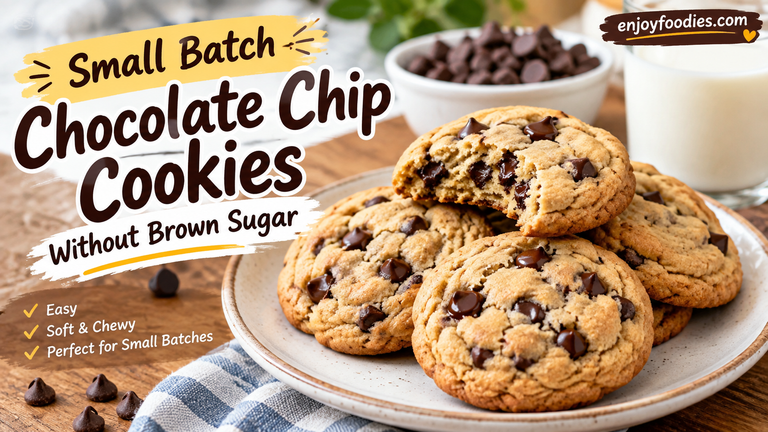
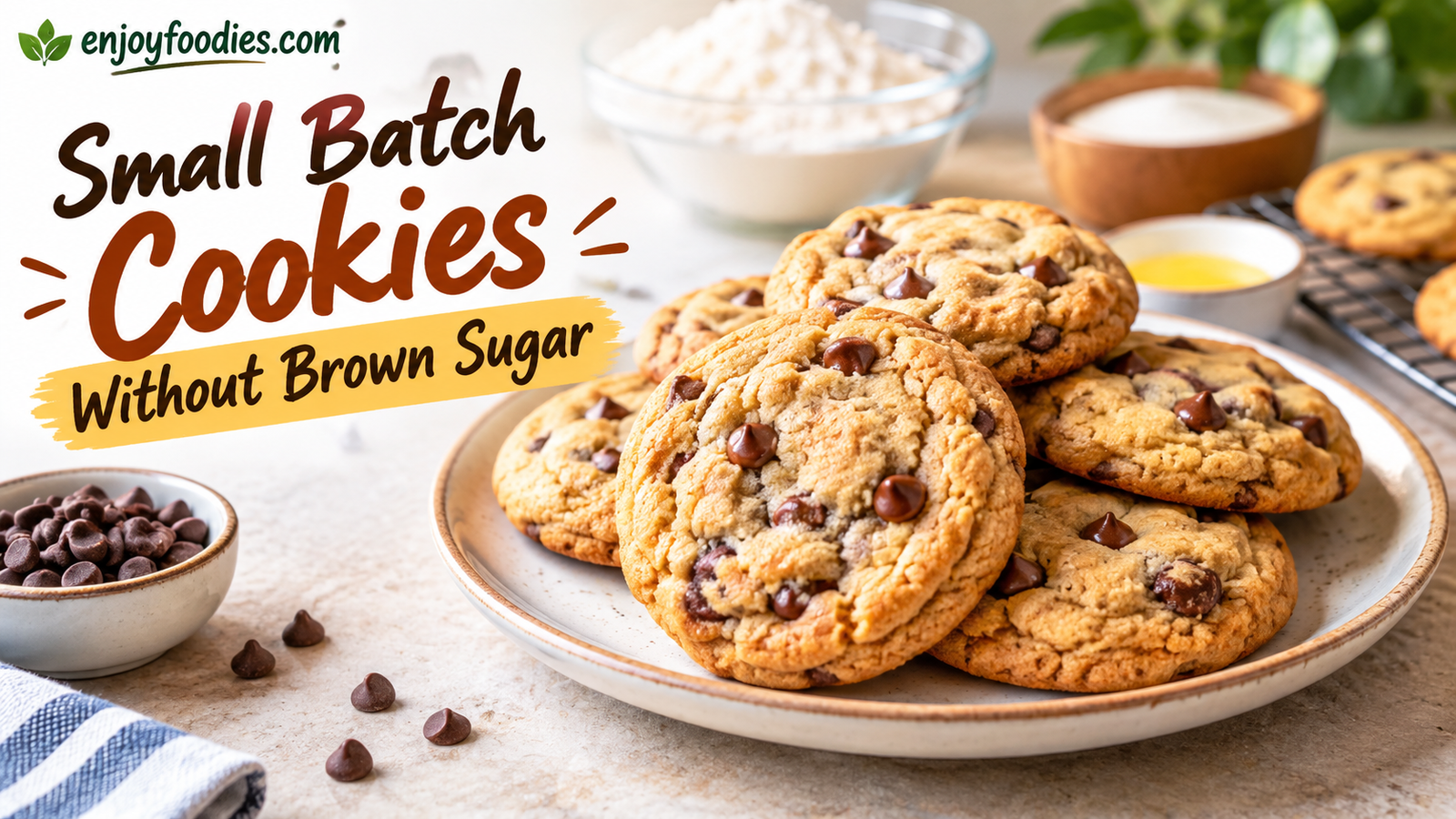
Small Batch Cookies Without Brown Sugar
Sometimes you want a warm, homemade cookie without making three dozen of them. That is exactly where small batch cookies without brown sugar come in. This easy recipe makes a small number of delicious cookies using simple pantry ingredients, so you can satisfy a cookie craving without ending up with a container full of leftovers.
These cookies are soft in the center, lightly crisp around the edges, buttery, and packed with chocolate chips. Best of all, you do not need brown sugar. Regular granulated white sugar works beautifully and gives the cookies a slightly lighter color with a classic sweet, buttery flavor.
Whether you have run out of brown sugar, do not normally keep it in your pantry, or simply want a quick dessert for one or two people, this recipe is worth keeping handy.
Why You’ll Love These Small Batch Cookies
There is something especially satisfying about a cookie recipe designed for a small household. You do not have to measure a huge amount of ingredients, wait for a large batch to bake, or worry about what to do with dozens of cookies afterward.
These small batch cookies without brown sugar are:
- Easy to make
- Made without brown sugar
- Perfect for one or two people
- Ready in about 20–25 minutes
- Soft and buttery
- Loaded with chocolate chips
- Made with basic ingredients
- Ideal when you want just a few cookies
- Easy to customize with your favorite mix-ins
The recipe is also forgiving. You can make the dough by hand with a bowl and spoon, so there is no need to pull out a stand mixer.
Ingredients You’ll Need
The ingredient list is intentionally simple. You probably already have most of these ingredients in your kitchen.
All-Purpose Flour
All-purpose flour provides the structure for the cookies. Measure it carefully because adding too much flour can make a small batch of cookies dry or crumbly.
For the most accurate measurement, gently spoon flour into a measuring cup and level the top with a knife.
Butter
Use softened unsalted butter if possible. Butter adds richness and helps create that classic homemade cookie texture.
The butter should be soft enough to mix easily but not melted. If it is completely melted, the cookies may spread more than you want.
Granulated Sugar
Since this is a recipe for cookies without brown sugar, regular white granulated sugar is the main sweetener.
White sugar creates cookies with slightly crispier edges and a lighter color than cookies made with brown sugar. It also gives the finished cookies a clean, classic sweetness.
Egg Yolk
A small batch does not usually need a whole egg. Using an egg yolk provides richness and helps bind the dough without adding too much moisture.
This is especially useful when you are making only a few cookies.
Vanilla Extract
Vanilla adds warmth and enhances the buttery flavor. Even a small amount makes a noticeable difference.
Baking Soda
A little baking soda helps the cookies spread and brown while contributing to their texture.
Salt
Do not skip the salt. Even though the cookies are sweet, salt balances the sugar and makes the chocolate flavor stand out.
If you use salted butter, you can slightly reduce the additional salt.
Chocolate Chips
Semi-sweet chocolate chips are an easy choice, but milk chocolate, dark chocolate, or chopped chocolate can also work.
For an especially chocolatey cookie, add a few extra chocolate chips to the tops of the dough balls before baking.
How to Make Small Batch Cookies Without Brown Sugar
Making these cookies is straightforward, even if you are new to baking.
Step 1: Prepare the Oven
Preheat your oven to 350°F (175°C).
Line a small baking sheet with parchment paper. This makes cleanup easier and helps prevent the cookies from sticking.
Step 2: Cream the Butter and Sugar
Place softened butter and granulated sugar in a bowl. Mix until the mixture becomes smooth and creamy.
You do not need to whip it for several minutes. Since this is a small batch, a spoon or small hand mixer works perfectly.
Step 3: Add the Egg Yolk and Vanilla
Mix in the egg yolk and vanilla extract until everything is evenly combined.
The mixture may look slightly creamy at this stage, which is exactly what you want.
Step 4: Add the Dry Ingredients
Add the flour, baking soda, and salt.
Stir gently until a soft cookie dough forms. Avoid overmixing once the flour has been incorporated because too much mixing can result in tougher cookies.
Step 5: Fold in the Chocolate Chips
Add the chocolate chips and gently fold them through the dough.
Try to distribute them evenly so every cookie gets plenty of chocolate.
Step 6: Shape the Cookies
Divide the dough into several small portions and roll each portion into a ball.
Place them on the prepared baking sheet, leaving enough space between each one for spreading.
For thicker cookies, keep the dough balls fairly tall. For flatter, crispier cookies, gently flatten them before baking.
Step 7: Bake
Bake the cookies for approximately 9–12 minutes, depending on their size and your oven.
The edges should look lightly golden while the centers may still appear slightly soft.
Do not wait for the centers to become completely firm in the oven. Cookies continue cooking from residual heat after they come out.
Step 8: Cool
Allow the cookies to cool on the baking sheet for about 5 minutes before transferring them to a cooling rack.
This short resting period allows the cookies to finish setting while remaining soft inside.
What Makes Cookies Without Brown Sugar Different?
Brown sugar contains molasses, which contributes moisture, color, and a deeper caramel-like flavor. White granulated sugar does not contain molasses, so cookies made without brown sugar usually have some noticeable differences.
When you make small batch cookies without brown sugar, expect:
- A lighter-colored cookie
- Slightly crispier edges
- A cleaner sweetness
- Less caramel flavor
- A buttery texture
- Plenty of chocolate flavor if you use chocolate chips
That does not mean brown sugar is necessary for good cookies. It simply creates a different style of cookie.
In fact, many people prefer the lighter, slightly crisp texture that granulated sugar provides.
Tips for Perfect Small Batch Cookies
Because this recipe makes only a few cookies, small ingredient differences can have a bigger impact. These tips can help you get consistent results.
Do Not Add Too Much Flour
Extra flour is one of the most common reasons homemade cookies turn out dry.
If you measure flour using cups, avoid scooping directly from the flour container and packing it down. Instead, spoon the flour into the measuring cup and level it.
Use Softened Butter
Softened butter mixes much more easily with sugar.
If your butter is cold, cut it into small pieces and let it sit at room temperature for a little while.
Avoid melting the butter unless the recipe specifically calls for it.
Watch the Baking Time
Small cookies can go from perfectly baked to overbaked surprisingly quickly.
Start checking them around the 9-minute mark. When the edges are lightly golden but the centers still look soft, they are usually ready.
Let Them Rest
Freshly baked cookies can seem too soft when they first come out of the oven. That is normal.
Give them a few minutes on the baking sheet. They will firm up while retaining a soft center.
Chill the Dough If Necessary
If your kitchen is particularly warm or the dough feels very soft, refrigerate it for 15–30 minutes before baking.
Chilling can help reduce excessive spreading and can produce a thicker cookie.
Can You Make These Cookies Without Brown Sugar and Still Get Soft Cookies?
Absolutely.
Brown sugar can contribute moisture, but it is not the only factor that determines cookie texture. The amount of flour, butter, egg, baking time, and sugar all play important roles.
For soft small batch cookies without brown sugar, avoid overbaking. Taking the cookies out while the centers are still slightly soft is one of the easiest ways to keep them tender.
You can also make the cookies slightly thicker rather than flattening the dough balls.
How Many Cookies Does This Recipe Make?
The exact number depends on how large you make each cookie.
A typical small batch produces around 6 cookies, making it ideal for one or two people.
If you make smaller cookies, you can get more. If you prefer large bakery-style cookies, you may get fewer.
The important thing is to keep the dough portions similar in size so they finish baking at approximately the same time.
Easy Variations
One of the best things about a small batch recipe is how easy it is to customize.
Double Chocolate Cookies
Replace a small amount of the flour with unsweetened cocoa powder and add chocolate chips. This creates a rich chocolate cookie without needing brown sugar.
White Chocolate Cookies
Use white chocolate chips instead of semi-sweet chocolate. A small amount of chopped macadamia nuts also pairs nicely with white chocolate.
Peanut Butter Cookies
Add a spoonful of creamy peanut butter to the dough and reduce the butter slightly to maintain the right consistency.
Oatmeal Cookies
Add a small amount of rolled oats for a heartier texture. Raisins, dried cranberries, or chocolate chips can be added as well.
Cinnamon Sugar Cookies
Skip the chocolate chips and add cinnamon to the dough. Before baking, roll the dough balls lightly in cinnamon sugar.
Nutty Chocolate Chip Cookies
Chopped walnuts, pecans, or almonds can add crunch and make the cookies more satisfying.
Can I Use Salted Butter?
Yes. Salted butter can be used in small batch cookies without brown sugar.
If you use salted butter, consider reducing or omitting the additional salt in the recipe. Different brands contain different amounts of salt, so adjust according to your preference.
Can I Use Margarine Instead of Butter?
You can, although the flavor and texture may be different.
Butter provides a rich flavor that is difficult to replicate. If you substitute margarine, choose a firm baking-style margarine rather than a very soft spread.
The moisture and fat content of different products can affect how much the cookies spread.
Why Did My Cookies Spread Too Much?
There are several possible reasons.
Your butter may have been too warm, the dough may have needed chilling, or there may have been too little flour.
Your baking sheet can also make a difference. A very warm baking sheet can cause the dough to begin spreading before it has a chance to set.
If your first batch spreads too much, chill the remaining dough before baking.
Why Are My Cookies Too Thick?
If your cookies barely spread, the dough may contain too much flour or your butter may have been too cold.
You can gently flatten the dough balls before baking if you prefer a thinner cookie.
Avoid making major changes to the ingredients all at once. Adjusting one thing at a time makes it easier to understand what works in your kitchen.
How to Store Small Batch Cookies
Once completely cool, store the cookies in an airtight container at room temperature.
They are generally best within the first couple of days, when the edges still have their fresh-baked texture and the centers remain soft.
If you want to keep them longer, you can freeze them.
Place completely cooled cookies in a freezer-safe container or bag, separating layers with parchment paper if necessary.
Can You Freeze the Cookie Dough?
Yes, and freezing cookie dough is especially useful for a small batch recipe.
Shape the dough into individual portions and place them on a parchment-lined tray. Freeze until firm, then transfer the dough portions to a freezer-safe container.
When you want a freshly baked cookie, bake a portion directly from frozen, adding a little extra baking time as needed.
This lets you enjoy one or two freshly baked cookies instead of baking the entire batch at once.
Common Mistakes to Avoid
Even a simple cookie recipe can go wrong if a few details are overlooked.
Using melted butter: Unless specifically required, use softened rather than melted butter.
Overmixing the dough: Mix just until the ingredients come together.
Adding too much flour: Measure carefully to avoid dry cookies.
Overbaking: The cookies should look slightly underdone in the center when removed from the oven.
Skipping salt: A little salt helps balance sweetness and improve flavor.
Putting dough on a hot baking sheet: Start with a cool baking sheet for more predictable spreading.
Frequently Asked Questions
Can I make cookies without brown sugar?
Yes. Granulated white sugar can be used to make delicious cookies without brown sugar. The finished cookies may be lighter in color and slightly crispier than cookies made with brown sugar.
What can I substitute for brown sugar in cookies?
For many cookie recipes, granulated white sugar can replace brown sugar, although the texture and flavor may change. Brown sugar contains molasses, so the substitution is not always a perfect one-to-one texture match.
Can I make these cookies with only white sugar?
Yes. This recipe is specifically designed around granulated sugar rather than brown sugar.
How do I make cookies soft without brown sugar?
Use the correct amount of flour, avoid overbaking, and allow the cookies to cool naturally after baking. Removing them from the oven while the centers are still slightly soft helps preserve a tender texture.
Why are my cookies crispy without brown sugar?
White sugar tends to encourage a crisper texture than brown sugar. If you want softer cookies, avoid flattening them too much and do not bake them longer than necessary.
Can I make this recipe for one person?
Yes. Because it is already a small batch, it can be divided further if you want only a couple of cookies.
Can I use chocolate chunks instead of chocolate chips?
Definitely. Chopped chocolate creates irregular pockets of melted chocolate and can give the cookies a more homemade, bakery-style appearance.
Final Thoughts
A good cookie recipe does not need to make a huge batch or require unusual ingredients. These small batch cookies without brown sugar are proof that a handful of simple pantry staples can turn into something genuinely delicious.
Using granulated sugar instead of brown sugar gives these cookies their own character: lightly crisp edges, a buttery center, and a classic sweetness that works especially well with chocolate chips. The recipe is quick enough for a weekday dessert and small enough that you will not be stuck with cookies for a week.
The next time you reach for the pantry and realize there is no brown sugar, do not give up on your cookie craving. Grab the regular sugar, soften some butter, and make a small batch. In less than half an hour, you can have warm homemade cookies ready to enjoy with a glass of milk, coffee, or your favorite cup of tea.
For the best results, remember the essentials: measure your flour carefully, use softened butter, avoid overmixing, and take the cookies out while the centers are still slightly soft. Those little details can make the difference between an ordinary cookie and one you will want to bake again.